

Cellulose nanofiber
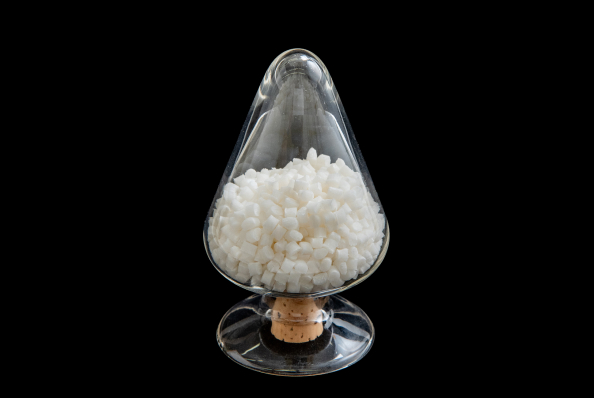
Product Name 03 FM pellets
A pellet-shaped composite material of cellulose and petroleum-derived resin based on Fibrimelt® technology.
Product Features
-
Feature01
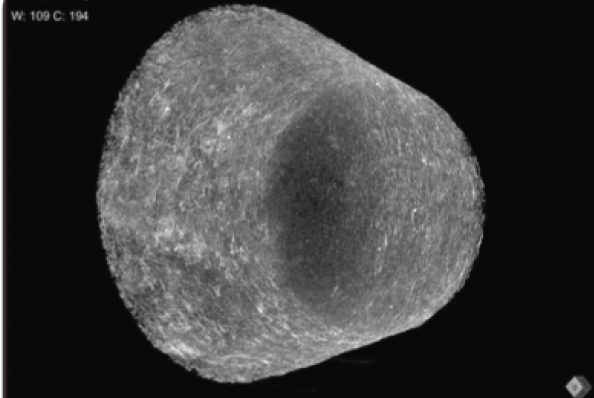
...Fibrimelt® technology ensures uniform dispersion of cellulose in various resins.
-
Feature02
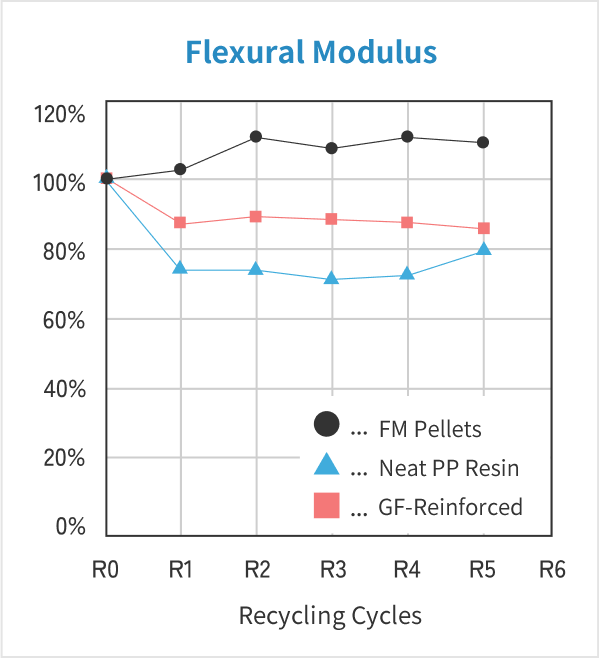
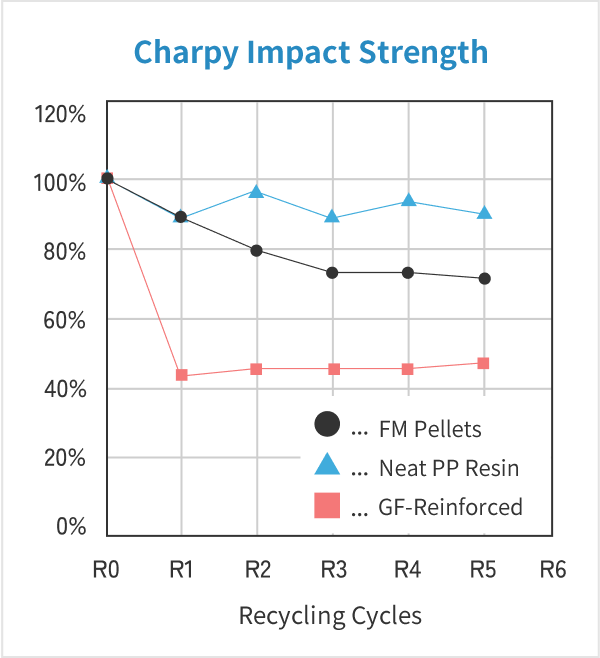
...A material for molding with a well-balanced flexural modulus and Charpy impact value.
-
Feature03
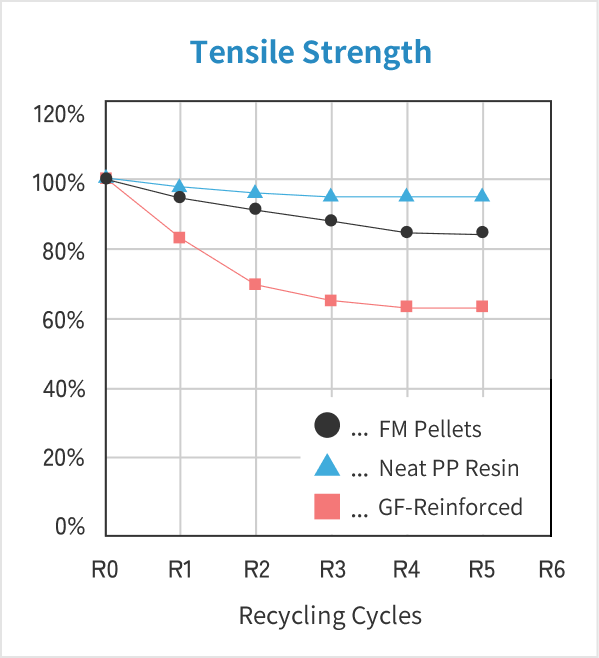
...The use of FM pellets reduces the loss of strength when reused.
-
Feature04
...Reinforced resin material for molding that does not easily damage molds.
-
pellets

-
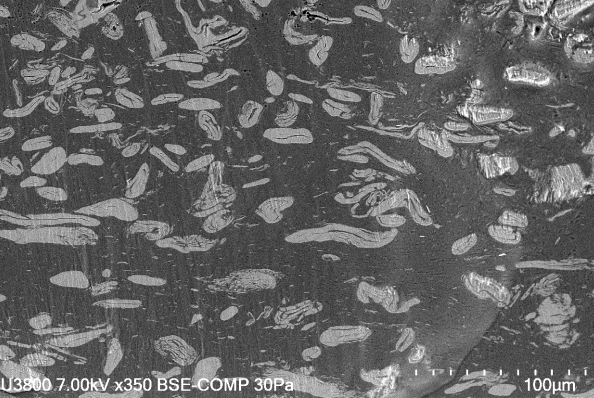
Electron micrograph of a composite fracture
-
Fiber dispersion state / X-ray CT image

Case studies of development and uses with expected applications
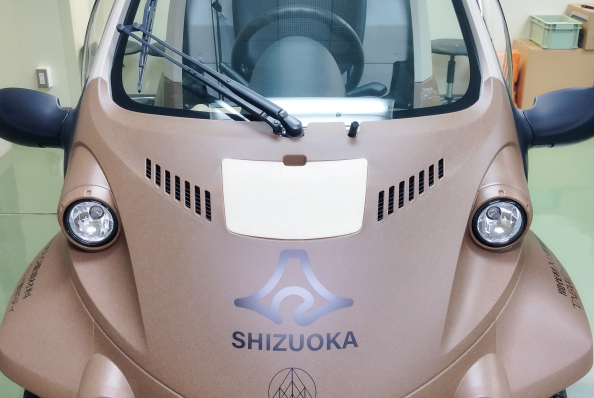
Development case study 1Provision of materials for the Shizuoka Mokumaru next generation mobility vehicle.
Shizuoka Mokumaru
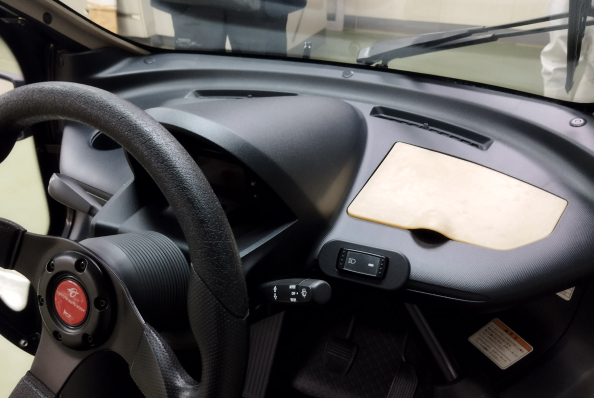
This is an industry-academia-government collaboration project centered around Toyota Auto Body Co., Ltd. Together with Shizuoka University, Shizuoka Prefecture, and local companies, they have developed the compact and environmentally friendly one-person mobility vehicle Shizuoka Mokumaru which partially uses our cellulose nanofiber material.
The Shizuoka Mokumaru is a model case of locally developed, locally procured mobility, using only parts developed and procured in Shizuoka Prefecture for the vehicle's exterior and structural materials.
Furthermore, the vehicle has been introduced at various exhibitions and in the media as a vehicle of the future that contributes to a decarbonized society, with an awareness of its affinity for sustainable materials and renewable energy.
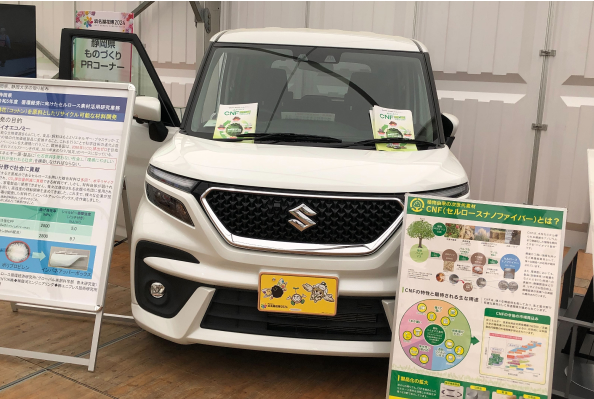
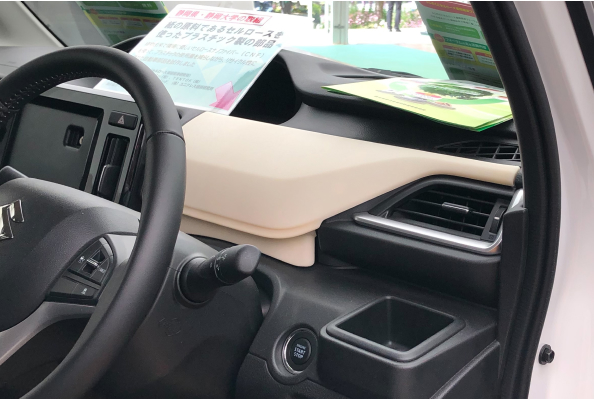
MFC/PP composite pellets are used in the interior parts of the Suzuki Solio exhibit at the Hamanako Flower Expo 2024.
MFC (microfibrillated cellulose) / PP (polypropylene) composite pellets, jointly developed by Shizuoka University and TENTOK Corporation, have been employed in the interior parts of the Solio, a display car of Suzuki Motor Corporation.
This product was installed in a vehicle exhibited at the Hamanako Flower Expo 2024 held in the spring of 2024, and the material is used in the instrument panel upper box (storage space above the instrument panel).
This initiative is part of a demonstration to promote the practical use of bio-materials in automotive components. The initiative has been highly rated from the perspectives of weight reduction, environmental friendliness, and utilization of local resources.
TENTOK's cellulosic materials are contributing to the realization of a sustainable society in the automotive field as well.
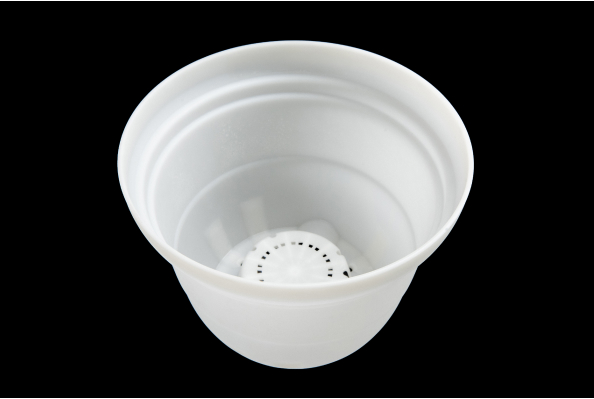
Development case study 3Recycled flowerpots made of cellulose composite material are used for environmental testing at elementary schools.
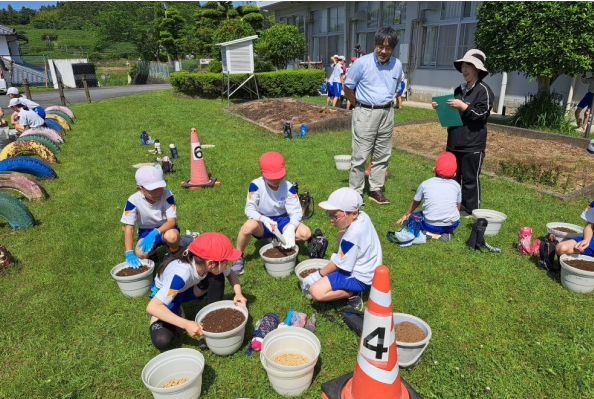
Associate Professor Kenji Aoki of Shizuoka University's Faculty of Global Interdisciplinary Science and Innovation and TENTOK Corporation have jointly developed an environmentally friendly flowerpot using MFC (microfibrillated cellulose) / PP (polypropylene) composite pellets (FM pellets).
This project was implemented as part of the CNF Collaboration Base Utilization Project (FY2023) promoted by Fuji City for the purpose of demonstration experiments and environmental education at elementary schools in the city.
Through the experience of planting, observing, watering, and growing cotton seedlings by themselves, the children came into contact with the characteristics of cellulose materials and their environmental friendliness.
After a certain period of use, the flowerpots will be collected, evaluated for deterioration over time (environmental durability), and recycled before being offered again to new students in the following year.
This recycling-based demonstration activity is also an opportunity for children to learn about the environment, and contributes to the practical application of bio-materials and the promotion of local understanding.
Other uses
-
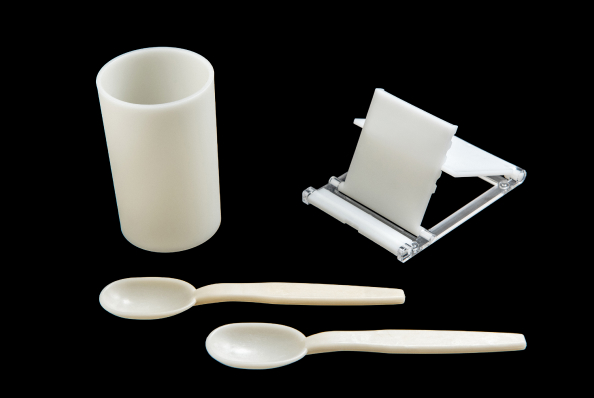
Cutlery
-
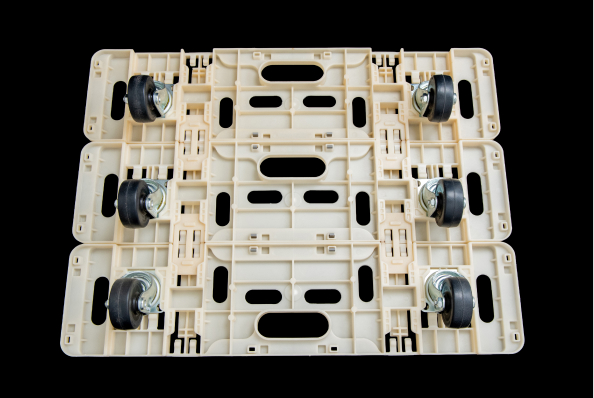
Structural materials for transport
-
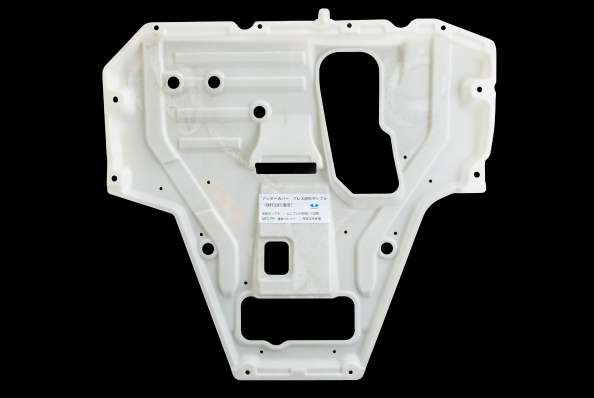
Automotive outfitting materials(under cover)
Courtesy of Unipres Corporation
Trends in physical strength properties through simplified recycling tests
The use of composite materials allows us to stabilize quality without significant loss of strength even after repeated recycling. The graph below shows a comparison of glass fiber-filled material (red), composite material (black), and resin alone (blue). The data show that the performance is maintained to some extent even after repeated reuse.
Quality data (characteristics table)
Combined with various resins, it can be used for a wide variety of applications.
Especially when mixed with biomass-derived resins, it can be proposed as a product with a higher biomass content.
It can also be used in combination with scrap wood and other materials.
-
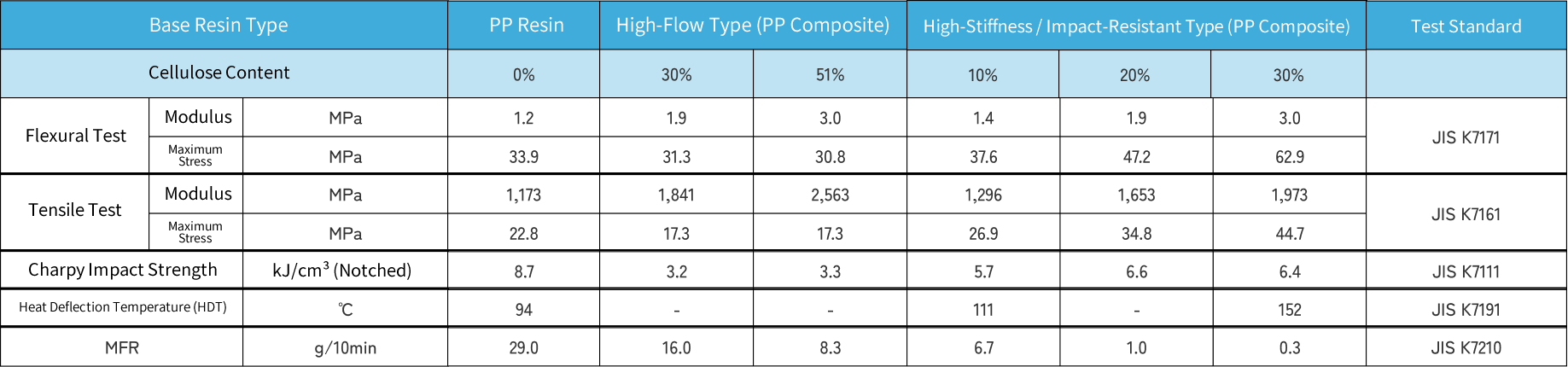
Cellulose/resin composite pellets (PP-based)

Note: Each value is the result of measurement with our measurement equipment. These are representative values and are not guaranteed.
Conformance with standards for food, additives, etc.
Note: Mechanical properties: Dumbbell test pieces were molded in accordance with JIS K7139 Type A in an injection molding machine with a 10-ton mold clamping pressure, and the above mechanical properties were measured.
Note: MFR: Measured at 230°C, 2.16 kg, with a heating time of 360 seconds.
Note: Load deflection temperature: bending stress 0.45 MPa, temperature rise rate 120°C/hr -
Cellulose/bio-PE composite pellets (100% biomass)

Note: Each value is the result of measurement with our measurement equipment. These are representative values and are not guaranteed.
Note: Mechanical properties: Dumbbell test pieces were molded in accordance with JIS K7139 Type A in an injection molding machine with a 10-ton mold clamping pressure, and the above mechanical properties were measured.
Note: MFR: Measured at 190°C, 2.16 kg, with a heating time of 360 seconds.
-
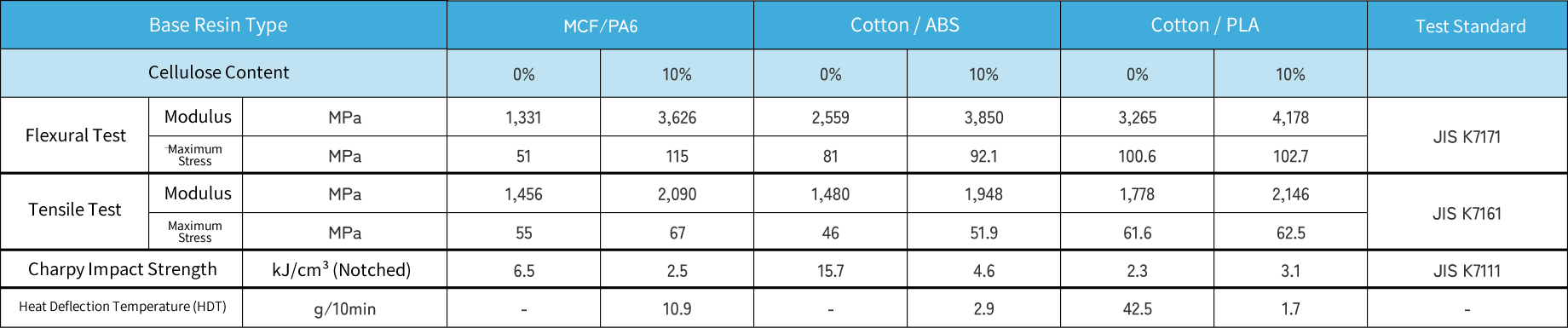
Cellulose/resin composite pellets (resin other than PP)

Note: Each value is the result of measurement with our measurement equipment. These are representative values and are not guaranteed.
Note: Mechanical properties: Dumbbell test pieces were molded in accordance with JIS K7139 Type A in an injection molding machine with a 10-ton mold clamping pressure, and the above mechanical properties were measured.
Note: MFR: Heating time of 360 seconds.

We also offer testing of composite materials on a contract basis.
Various cellulose and resin composites can be manufactured on request on a contract basis.
We can mix materials upon request and provide pellets (materials can also be supplied by the customer).
We offer consultation about pilot production, and evaluation data for basic physical properties can be measured and provided.
Although currently in the pre-market stage, we are meeting a wide range of needs through contract manufacturing.
Please feel free to contact us by phone first.
Hours
9:00 - 16:00
(except Saturdays, Sundays, and holidays)
Note: Costs will be incurred depending on the details of the request.
Note: We may not be able to accept some requests depending on the content of the request.
Facilities
| Prototype | Twin screw extruder | Discharge volume ~30kg/h | Standard | Fabrication of various composites |
|---|---|---|---|---|
| Specimen preparation | Injection molding machine | Mold clamping pressure 10t | Dumbbell specimen preparation | |
| Evaluation equipment | MFR measuring instrument | Melt index | JIS K7210 | Toyo Machine Manufacturing Co., Ltd |
| Charpy impact tester | Impact tester IT | JIS K7111 | Toyo Machine Manufacturing Co., Ltd. | |
| Notching machine | Notching tool | Toyo Machine Manufacturing Co., Ltd. | ||
| Tensile and bending universal testing machine | Tensilon Series | JIS K7171, 7161 | A&D Company, Limited |